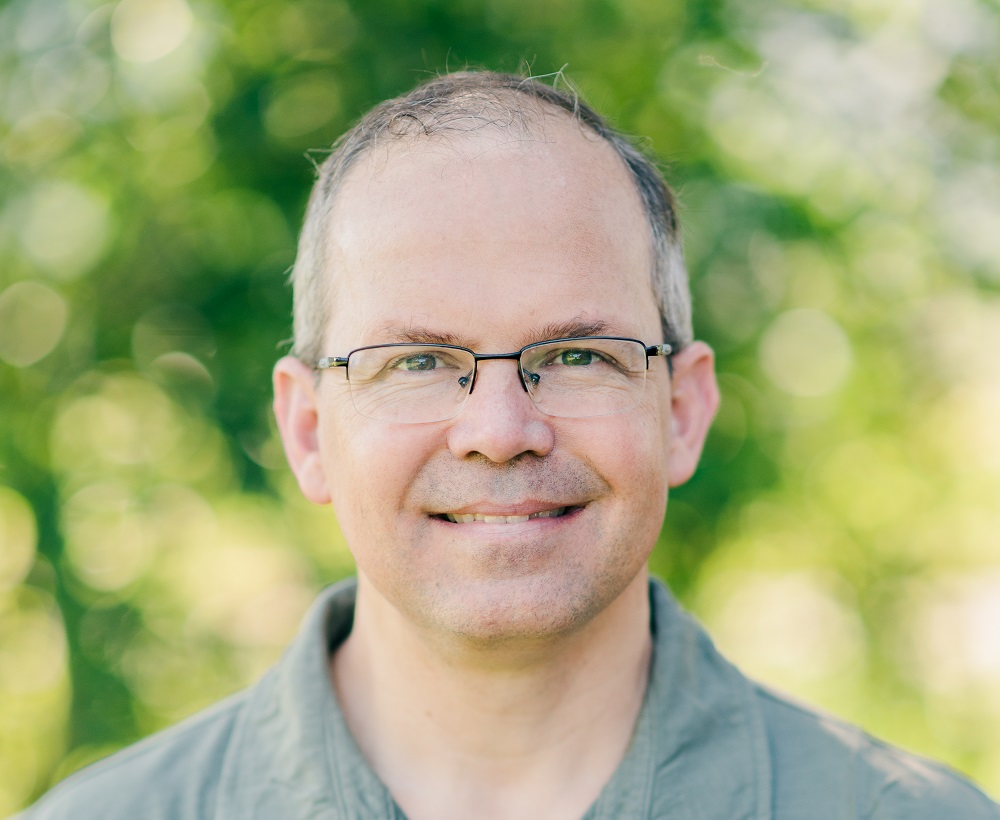
 When Jayson graduated from Timothy Christian School in 1992, little did he know that the Lord would send him to be a journalist in the Middle East. Jayson primarily writes articles for the popular Christian news publication, Christianity Today, but in April he began a new venture called Middle East Harmony. He desires it to be a more intentional way to report stories and share perspectives that help overcome the divisions and misunderstandings that exist in the region. The titles of his first three introductory articles are “Welcome to Middle East Harmony,” “About Middle East Harmony,” and “The Multicolored Leaves of Healing.” In these articles he specifies the goals of his new project and shares more about the Middle East Harmony logo.
We are proud of how the Lord is using Jayson to report authentic stories from abroad. Let’s hear more from Jayson himself about how attending TCS helped prepare him for where he is now!
What do you love most about TCS?
TCS has become more diverse over the years, mirroring the changing demographics of central New Jersey. But I appreciated how it always reflected more than a simple white evangelical culture. At the same time, the school holds to biblical values and instills these in us as students. I am glad for the quality education I received from teachers who loved God by loving us and dedicating themselves toward our academic development.
What is one word that best describes the school? Why?
Comprehensive. TCS cares about the whole person. It provides a broad education and varied extracurricular activities. It facilitates leadership opportunities and spiritual development. And it holds an open posture toward the world and the place of believers in it. The school lives its values and encourages the students to do the same within a Christian ethos.
 Describe one of your favorite memories of TCS.
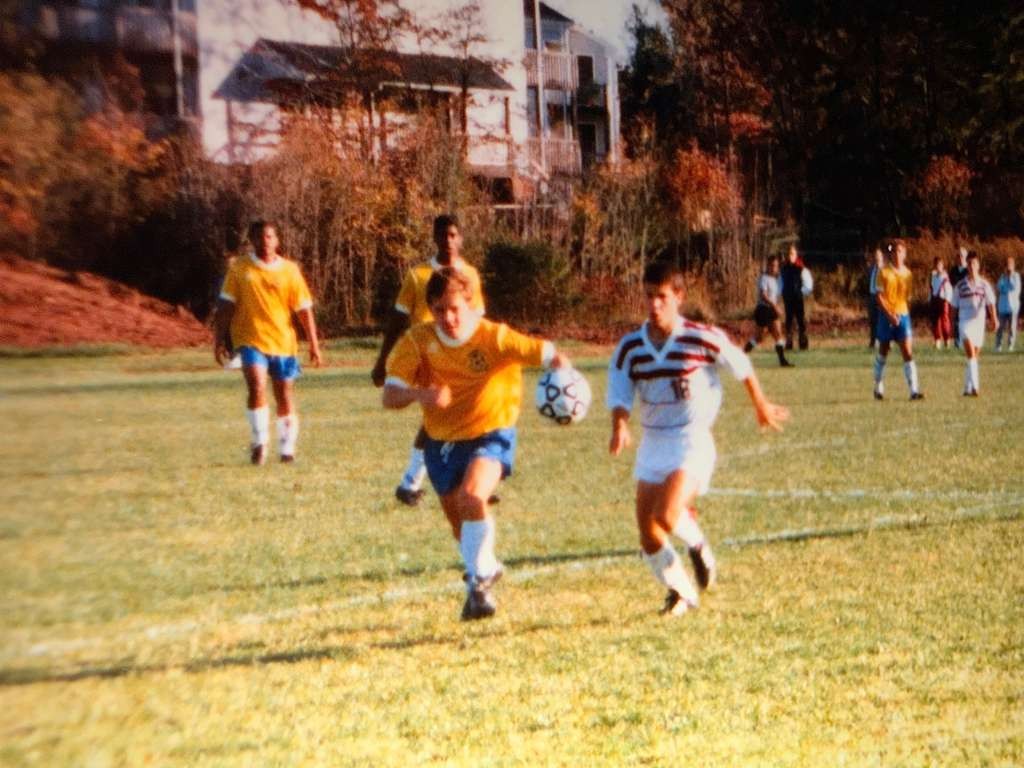
On a soccer mission trip to the Czech Republic, I had the opportunity to give the halftime devotional. I loved playing for our team, surrounded by good players and a winning culture instilled by Mr. Bills. But traveling abroad taught us how to build bridges, reinforcing the TCS message that our sporting conduct reflected Christ.
I took this to heart and asked our host to help me memorize the opening sentences of my testimony in Czech. I had no idea how the sounds I made connected to the words I intended. But they connected me to the other team immediately, as their eyes lit up in surprise. I have no memory of the actual game itself, but the experience planted a seed—little did I know how important a foreign language (Arabic) would become for me later in life.
From your own experience, why do you believe it was important for you to attend TCS?
In an odd sort of way, being at TCS was important in pushing me out of a Christian bubble. I greatly appreciated the education and environment. But by my senior year I knew I did not want to continue in a Christian setting. This was not rebellion, but a desire to see what faith meant outside the protective environment of family, church, and school.
For me, TCS not only prepared me for the challenges of a secular university, it gave me the curiosity to experience religious diversity and the desire to live for Christ in the outside world. A different Christian school might have encouraged the purity of isolation, or alternately, turned us off to God through hypocrisy or legalism. I’m thankful that TCS encouraged my path.
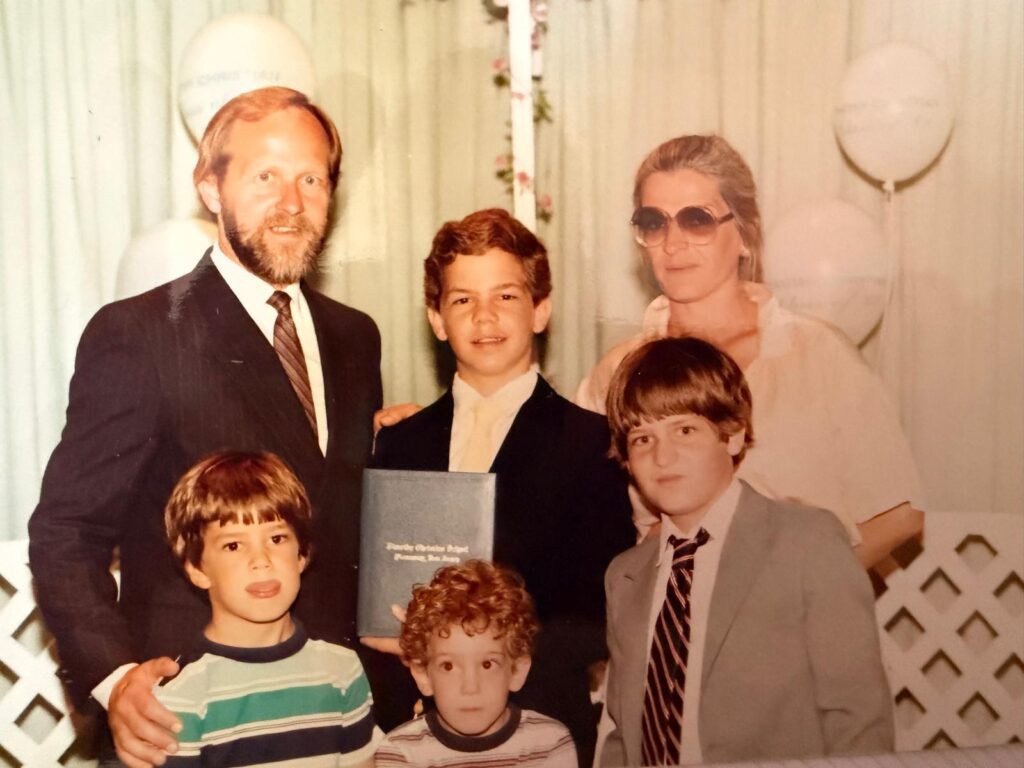 How are faith and learning integrated at TCS?
It is hard to remember the specifics from so many years ago. Chapel, Bible class, and spiritual emphasis week demonstrate the commitment of TCS to the role of faith in education but are not examples of integration. Science classes dealt with biblical issues and emphasized the wonder of God’s creation.
But perhaps what I would say is that the teachers allowed class to be class and did not impose a religious overlay on everything. Rather, they conveyed their academic expertise as an outflow of their spiritual conviction. This type of integration, I believe, reflects TCS’s overall confidence in God as sovereign and present in the affairs of this world.
In what ways did TCS prepare you for college and beyond?
TCS gave me a good academic foundation for college, in both knowledge base and critical thinking. What I am especially thankful for was Mrs. Martin’s drama class.
Growing up I was a good student and a good athlete but sometimes felt socially inhibited. Knowing me from other subjects, Mrs. Martin pushed through my reluctance and persuaded me to choose her acting course and to audition for theater roles. Over time, I came out of my shell and developed more public confidence.
TCS provides a solid education. But it is the care and attention of the teachers to the uniqueness of each student that contributes most to their success.
What would you tell a friend to encourage them to send their child to TCS?
Don’t be afraid of the world. But do recognize the value of community in the spiritual formation of your children. TCS provides an enclosed campus with low student-to-teacher ratios that gives space to everyone from K-12 to feel part of a family atmosphere.
As a student I remember when crossing the brook felt like entering a different universe surrounded by imposing big people. By high school, crossing the brook represented a return to familiarity and a reminder I was once that young. And in many cases, my old teachers were still there.
That consistency over time implicitly cultivates respect across generations. These intangible benefits are what I would emphasize to a prospective parent. You can get a good education anywhere. TCS offers an environment of care.
Where are you today?
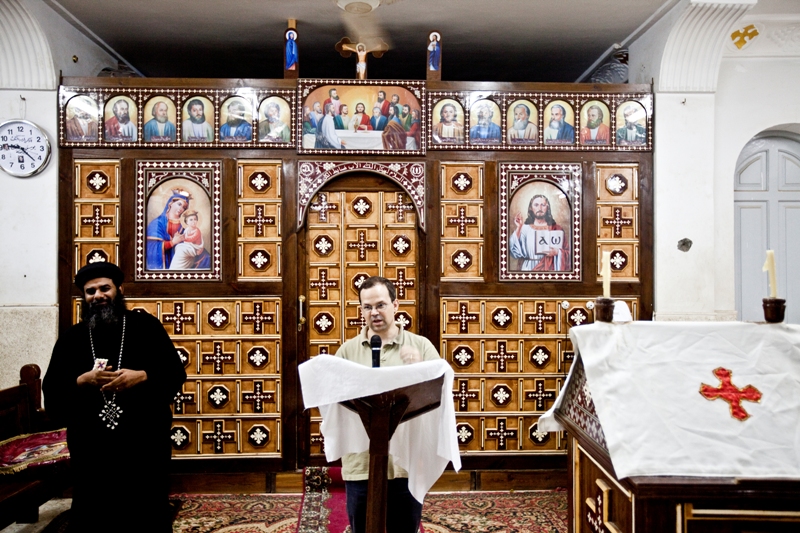 I serve with the Reclaim organization in Lebanon as a Middle East journalist. I write primarily for Christianity Today and have recently started a new project called Middle East Harmony.
We have lived in the Arab world for over 20 years now, deeply appreciating the people and their culture. The goal of my reporting is to cover the region with sympathy, increasing understanding of diverse religious communities frequently seen as inherently in conflict. Very often, the issues that divide us stem from different yet sincere commitments to conflicting yet honorable principles, all seeking the common good.
My convictions are evangelical, and I write from this foundation. But other evangelicals reach opposite conclusions that should not threaten our overall unity. There are bad actors in the world. But as God’s image marks every individual, we can find similar harmony with Catholics, Orthodox, Muslims, Jews, and secular people of all orientations. Please check out the site and consider subscribing, joining the effort to overcome the polarization that plagues our world.
What do you like best about your career?
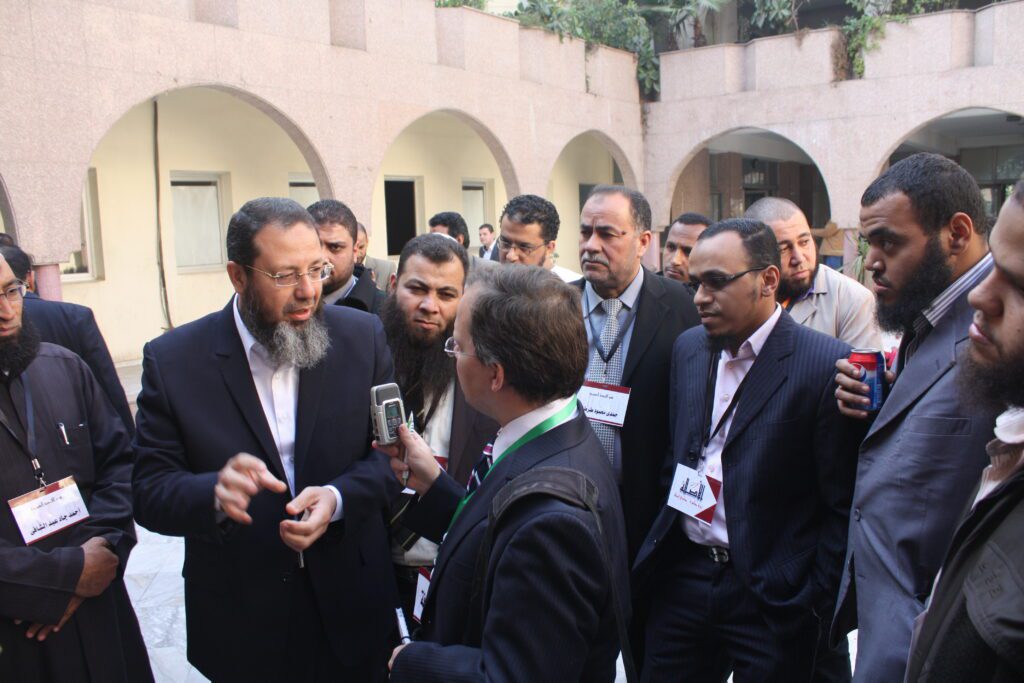 A journalist revels in the ever-learning curve of new stories and fascinating sources. I’m thankful that I have been able to elevate the voice of Christians in the Middle East and beyond, reporting on conflict in Israel/Palestine/Lebanon, Syria/Iraq/ISIS, Armenia/Azerbaijan, Russia/Ukraine, Sudan, and now Iran.
US media usually views these conflicts through the lens of American politics. I’ve been able to ask the local church how believers strive to live the gospel in challenging times. Their answers, like ours, often conflict. But it has been a great privilege to learn from them, encourage them, and sometimes, ask the question that refocuses them on Christ when they get swept up in the urgency of their particular cause.
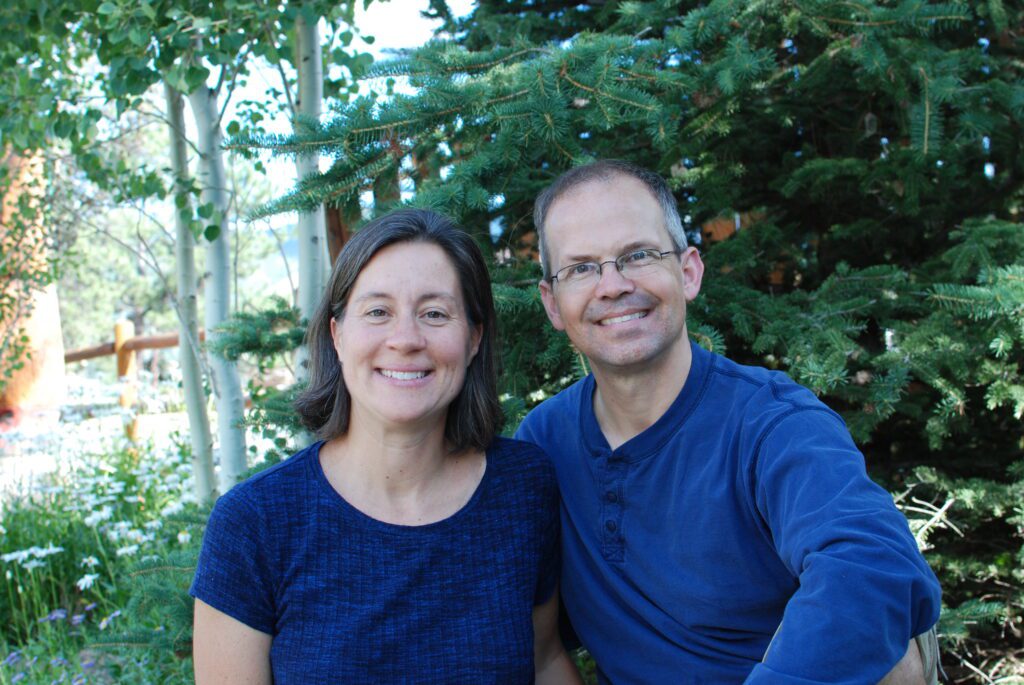 But the best part of my career is that I get to do it with family. I work from home with my wife and children around, as they also love Lebanon and the Arab world. Julie volunteers in local ministry, while our four children (one now in college) go to school and lead rather normal lives with their friends and activities. I couldn’t do what I do without their support.
What has been the most challenging part of your career?
I just mentioned war, right? Actually, so far and by God’s grace, that part of life in the Middle East is not the primary challenge. I reported previously from Egypt during the chaos of the Arab Spring. In Lebanon, bombs drop regularly about 15 minutes from our neighborhood. But what the media usually fails to convey about war is that much of the country can carry on with life.
War is horrible, people die, and thousands are displaced from their homes. There is real stress in wondering if it will spread to our area and in making advance preparations in case it does. But God has been gracious, and we help where we can.
The challenging part is living as a Christian in a Muslim majority world. Muslims are wonderful, most treat Christians just fine. But our faith is meant to be shared with others, and this can be understandably offensive to them. This creates an internal tension about how to be faithful to both Christ and our hosts.
We do our best to navigate it. What helps is having a job that allows me to report Muslim reality also, honoring their challenges as I do those of the church. The gospel is a stumbling block to all people, everywhere. But it has made me into a ‘good news’ person, and I hope this is reflected in my life, witness, and reporting.
To read more about the work that Jayson Casper is doing in Lebanon please check out his new venture Middle East Harmony.